Preparation Is Key: Navigating Transition from Military to Civilian Life

Wounded Warrior Project and USAA Help Service Members Prepare for Life After the Uniform
Leaving the military and stepping into civilian life is one of the most significant transitions a service member can make. It marks the end of a familiar chapter and the beginning of a new journey filled with opportunities, challenges, and unknowns.
Today, fewer than 1 in 5 transitioning service members feel fully prepared to secure civilian employment, according to the Department of Defense (DoD). Transitioning to civilian life amid a tumultuous job market and rising cost-of-living concerns creates enormous pressure on veteran households.
While the transition can feel overwhelming, one of the most important factors that determines how successful it will be is preparation. And the key to effective preparation is starting early and planning ahead.
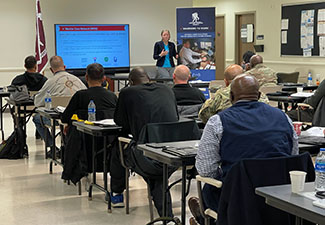
Wounded Warrior Project® (WWP) helps service members plan for their next mission. WWP’s Transition Ready program teaches service members about resume writing and interviewing, budgeting and financial planning, filing for VA benefits, and more.
USAA, a long-time supporter of WWP, launched Honor Through Action™, a movement dedicated to championing the military community by focusing on critical areas such as transition assistance. Anchored in driving meaningful, measurable change in the issues that matter most — financial security, meaningful careers, and well-being — Honor Through Action recognizes the interconnectedness of these pillars during the transition to civilian life. As part of a $500 million, five-year commitment to these causes, USAA has invested $1 million in WWP’s mission, including significant support for the Transition Ready Program.
A New Step in Life’s Journey

WWP's Transition Ready program offers tips for a smoother transition, including resume writing, interview prep, filing for VA benefits, and more.
For many service members, transitioning isn’t just about finding a new job; it’s a major identity shift. After years of following a clear chain of command and fulfilling roles with defined expectations, civilian life can feel ambiguous.
“Transition stress is real,” said Tony Hinojosa, career transition manager for Warriors to Work®. “Some people are more prepared for it than others, but no one is immune to it.”
While a transition can prompt questions about what’s next, it also creates space to redefine your purpose, explore new paths, reconnect with family, and rediscover passions you may have put on hold.
“One of the things I was most nervous about was that next chapter — what I was going to do for work,” said WWP warrior James Leathers, who went through WWP’s Transition Ready program before leaving active duty in the Army. “You start reading civilian job descriptions and thinking, ‘Am I actually qualified for this?’ That uncertainty can weigh on you.”
This next chapter is not a loss — it's an evolution. The skills, discipline, resilience, and leadership experiences gained through military service are powerful assets in the civilian world.
Service member and WWP warrior Steven Floyd participated in the Transition Ready® program while preparing to retire after more than 20 years of service. He’s not new to the transition process, having left the Navy before joining the Army. Despite his long-term military career, he’s looking forward to the opportunities ahead.
“I know a lot of people where this becomes their identity — and they’re usually the ones that have the hardest time when it comes to transition,” Steven said of being in the military. “For me, it was always, ‘This is something I do. It’s a job.”
With 25% of the USAA workforce having a direct connection to the military, the transition process is more than just a corporate initiative — it’s a shared personal experience. This deep-rooted understanding shapes how USAA supports its members and helped inform the decision to work alongside WWP on this program.
“I see the difficulties service members face when making this transition every day—not just from my own career, but through the shared experiences of our members and employees,” said Maj. Gen. (Ret.) Bob Whittle, USAA senior vice president of Military Affairs. “It is a complex shift, and the Transition Ready program offers the vital resources needed to ensure service members are prepared for the financial and professional realities of civilian life.”

Benefits Services is part of the WWP Transition Ready program, helping service members learn about filing for VA benefits, including BDD claims.
Why Preparing Early Makes All the Difference
The biggest misconception among transitioning service members is believing they have plenty of time. In reality, the transition process often takes longer than expected. That’s why starting early is so important.
“I started attending transition programs when I was about two years out,” Steven said. “If people wait until that one‑year mark, they’re already behind. There’s so much information, and you don’t realize how much has to happen until you’re in it.”
James shares a similar perspective. The military had been James’ entire career up to now, but he recognizes that preparation is key to navigating what comes next.
“I don’t think you can start early enough,” he said. “I had a plan to get out, and I still felt like there were things I was behind on. The more time you give yourself, the better.”
Reasons to Start Preparing for Transition Now
Career planning takes time.
Identifying what you want to do next, whether it’s employment, entrepreneurship, education, or retirement, requires reflection. You may discover that your ideal career path requires training, certifications, or additional education.
James began taking classes before leaving the military and had a job lined up before his transition. While he had some concerns about losing the structure and safeguards the military provides, he looked forward to the next chapter.
“I think the thing I was most excited for is the work-life balance,” James said of his post-military career. “I'm excited for a new chapter to see what happens and what it has to bring.”
Translating military experience isn’t always straightforward.
Explaining your accomplishments in civilian-friendly language is a skill and resumes often go through multiple drafts before they’re ready for employers.
“Trying to translate military experience into civilian language was one of the hurdles for me,” James said. “Having help with resumes and interviews made a huge difference in feeling confident going into that process.”
Warriors to Work can help service members and veterans customize their resumes to align with civilian job experience and requirements.
“Recruiters spend about seven seconds on a resume,” Tony noted. “That’s why learning how to translate military experience and write a strong professional summary is so important. It has to grab attention immediately.”
Interviews and job searches can be lengthy.
The hiring process in the civilian workforce can take weeks to months. Starting early prevents stress and gives you the freedom to find the right fit — not just the first available option.
“Start doing research early into potential job fields that may interest you,” Steven said. “I think sometimes we get too wrapped up in what we did in the military and say, ‘Now let me get out and do something similar,’ but don't be afraid to explore different industries, and do something different for a change.”
Benefits and administrative tasks require attention.
VA claims, medical appointments, and documentation often involve long wait times. Early planning ensures nothing is rushed or overlooked.
Preparing early gives you flexibility, confidence, and a stronger sense of control over your future.
“Another part I think that was super important is that we had a class on the VA process,” James said of WWP’s Transition Ready program. “I did not know much about the VA process, and going over how the process works, what should be happening, what is allowed, or what's not allowed for exams, just makes the process not seem like an unsolved puzzle.”
Financial planning should not be overlooked.
Early awareness becomes especially important when it comes to finances. According to an upcoming report from The USAA Educational Foundation, young veterans are more likely to fall behind on debt payments in the months following separation. Preparing early allows service members to realistically assess their financial needs, particularly when facing the potential loss of a steady income, basic allowance for housing (BAH), or the cost of living in a new location.
“You have to understand how much money you actually need to survive versus what you want to make,” Tony said.
Steven echoes that sentiment and offers advice he learned throughout his military career and in his preparation for retirement.
“Start cleaning up your finances two to three years out,” he said. “Pay down debt, avoid big purchases, and don’t put yourself in a position where the only way you can survive is landing a high‑paying job right away. Start working on the financial aspect because that's going to aid you in helping with less stress when it comes to looking for that next career or if you just need to take a break.”
You Don’t Have to Navigate the Process Alone

WWP and USAA are committed to helping prepare service members for a successful transition from military to civilian life.
One of the greatest strengths of the military community is its support network, and that support doesn’t end when you take off the uniform. Veterans service organizations, nonprofits, and community partners provide resources ranging from career counseling and financial planning to benefits assistance, mental health services, and mentorship.
For Steven, participating in WWP’s Transition Ready program helped bring clarity to what can otherwise feel overwhelming.
“It was crazy to find out just how many organizations and platforms are available for transitioning,” he said. “They hit on everything and help manage expectations about what getting out actually looks like.”
The value goes beyond information alone.
“You don’t know what you don’t know,” Steven said. “Having someone help you narrow things down and understand the order you need to do things in takes a lot of pressure off.”
WWP provides guidance and support to help service members make sense of the transition ahead.
“The biggest takeaway for me was actually getting into Transition Ready in person and hearing about all the resources Wounded Warrior Project had available,” James said. “That alone eased a lot of the anxiety and stress of transitioning.”
Tony believes that human connection is what sets WWP apart, along with its program and services.
“It’s not just about employment,” he said. “It’s someone sitting across from you, listening to you, and helping you work through what’s next.”
Making the Most of the Journey
Transitioning out of the military is not a single event; it’s a journey. Approaching it with intention and early preparation helps build momentum and reduces the uncertainty that often comes with major life changes.
Whittle’s team at USAA is comprised of both enlisted and officer veterans from all military branches; the group helps maintain USAA’s relationships with military communities and senior military officials.
“We meet our members where they are in their experience, and we know the transition period is one of the toughest,” Whittle said. “WWP’s Transition Ready Program provides the kind of holistic support for service members that demonstrates how meaningful careers drive financial security, laying the groundwork for overall well-being.”
Service members have already proven they can adapt, overcome challenges, and lead through uncertainty. With early planning, support from military and community organizations, and a willingness to embrace new possibilities ahead, military transition can become a powerful step toward a fulfilling and meaningful future.
“This next chapter is just a new mission,” Tony said. “And it’s one you don’t have to face alone.”
Learn how WWP helps warriors thrive for a lifetime.
Contact: Paris Moulden, Public Relations, pmoulden@woundedwarriorproject.org, 904.570.7910
About Wounded Warrior Project
Wounded Warrior Project® (WWP) is the nation's leading veterans service organization, focused on the total well-being of post-9/11 veterans, active-duty service members, and their families. Our programs, advocacy, and awareness efforts help warriors thrive, provide essential lifelines to families and caregivers, and prevent veteran suicides. Learn more about Wounded Warrior Project.

Transitioning from military life to civilian life can be a significant change for veterans but also an opportunity for a new beginning. Things like finding a new job or career, adjusting to...
Wounded Warrior Project® (WWP) aims to prepare warriors for the next stage of their lives after service and helps them to navigate the transition back into the civilian world. WWP’s Transition...
If you are on active duty and within a certain date range from discharge, you can potentially file for disability benefits from the Department of Veterans Affairs (VA) and get a head start...

Worry, fear, and anxiety about being able to pay monthly bills or save for the future can lead to financial stress. For wounded veterans, the COVID-19 pandemic added to those pressures. In a 2020...